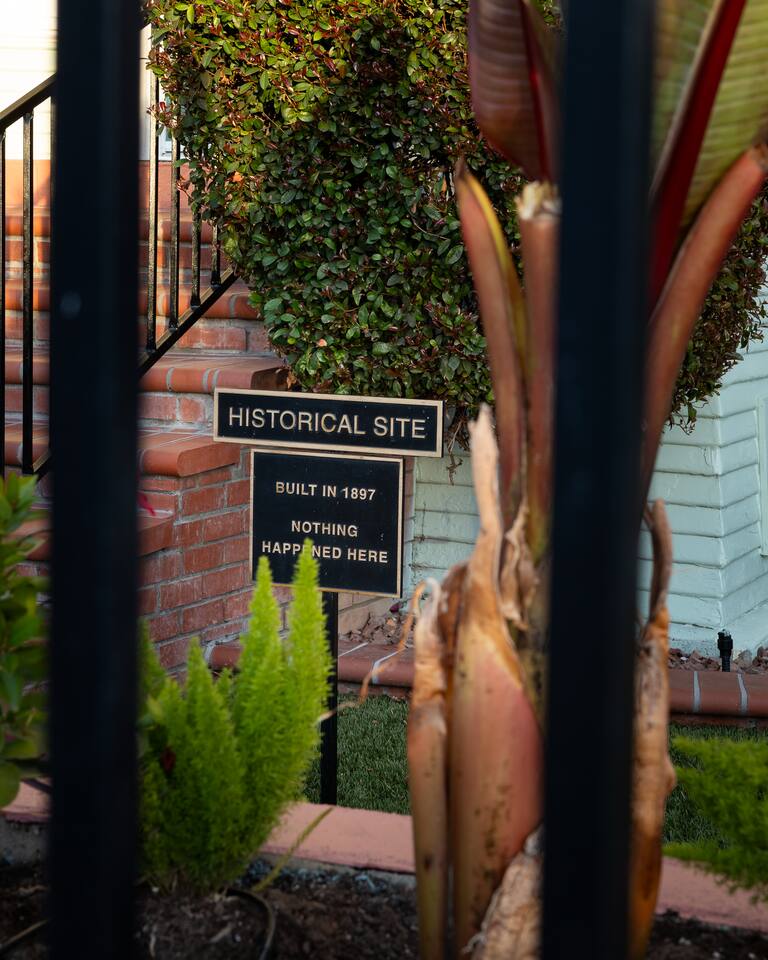
How to Get the Mills Act on a Property That Already Has Historical Designation
ADVICE Josh Taylor. September 3, 2026
ADVICE Josh Taylor. September 3, 2026
Owning a historically designated home can come with a lot of charm, character, and responsibility. One of the biggest financial benefits available to owners of historic properties in California is the Mills Act, a program that can significantly reduce property taxes in exchange for preserving and maintaining the home’s historic character.
If your property already has historical designation, you’re much closer to qualifying than most homeowners. In many cases, historical designation is the hardest part of the process. Once that is in place, applying for the Mills Act becomes much more straightforward.
What Is the Mills Act?
The Mills Act is California’s primary historic preservation tax incentive program. It allows local governments to enter into contracts with owners of qualified historic properties.
In exchange for agreeing to preserve and maintain the historic features of the property, the homeowner may receive a substantial property tax reduction, often anywhere from 20% to 60%, depending on the property and assessment.
For many owners, that tax savings can mean tens of thousands of dollars over time.
Step 1: Confirm the Property’s Historical Designation
Before applying for the Mills Act, confirm the property’s historic status.
Generally, your property must already be designated as one of the following:
A locally designated historic resource
Listed on the National Register of Historic Places
Listed on the California Register of Historical Resources
Located within an approved historic district (depending on local rules)
If your home already has historical designation, you’ve cleared a major hurdle.
In many cities, once designation is established, getting Mills Act approval becomes far more achievable.
Step 2: Check Your City’s Mills Act Requirements
Not every city handles Mills Act applications the same way.
Each local jurisdiction sets its own rules regarding:
Annual application windows
Contract caps
Minimum rehabilitation requirements
Inspection procedures
Preservation standards
For example, San Diego has its own Mills Act guidelines administered through the city’s historical resources process.
Some cities have limited annual spots, which makes timing important.
Step 3: Prepare a Preservation Plan
A Mills Act application usually requires a detailed preservation or maintenance plan.
This outlines how you will protect and maintain the historic integrity of the property over the contract period.
Typical preservation items include:
Exterior paint restoration
Window repair or restoration
Roof maintenance using historically appropriate materials
Masonry or foundation repair
Porch, trim, or woodwork restoration
Structural stabilization
The city wants to see that tax savings will support real preservation work.
This is one of the most important parts of the application.
Step 4: Gather Supporting Documentation
Most applications require supporting documentation such as:
Historical designation paperwork
Current property photos
Architectural photos of key details
Site plans or sketches
Cost estimates for proposed restoration
Ownership records
The more organized your application, the smoother the review process tends to be.
It also helps to document any previous restoration work that respected the home’s historic character.
Step 5: Submit the Mills Act Application
Once your application package is complete, submit it during the city’s application period.
The review process often includes:
Staff review
Historic board or commission review
Possible site inspection
Final city approval
Some cities may request revisions or additional documentation.
Patience matters here, approvals can take several months.
Step 6: Understand the Mills Act Contract
If approved, you’ll sign a Mills Act contract with the city.
This contract typically:
Runs for 10 years initially
Automatically renews annually
Stays attached to the property when sold
That means future buyers may benefit from the tax savings as well, which can enhance resale appeal.
A property with both historical designation and Mills Act tax benefits can be highly attractive to preservation-minded buyers.
How Much Can You Save With the Mills Act?
Tax savings vary based on:
Purchase price
Current assessed value
Income potential (if applicable)
County tax calculations
Higher-value properties often see the largest dollar savings.
This is why many owners of historic homes actively pursue Mills Act contracts soon after designation.
Is Getting the Mills Act Easier If You Already Have Historical Designation?
In most cases, yes.
Historical designation often represents the most time-intensive part of the preservation process.
If your property already has designation, you may already be 70% to 80% of the way there.
The remaining work is usually about demonstrating a clear commitment to preservation and meeting local application requirements.
Final Thoughts
If you own a historically designated home and are considering the Mills Act, it is worth exploring sooner rather than later.
The combination of historic preservation tax savings, increased property appeal, and long-term restoration support can be a major win.
For many owners, the Mills Act becomes one of the best financial tools available for preserving a historic property while reducing carrying costs.
If your home already has historical designation, you may be much closer to qualifying than you think.
Stay up to date on the latest trends in real estate.

October 17, 2026
The Modernist Weekend: Four Architect-Designed Homes Worth the Drive

October 17, 2026
What the FAIR Plan covers, what it leaves out, and how a DIC policy fills the gap

October 9, 2026
Real listings, price per square foot by neighborhood, and the tradeoffs buyers face this fall

October 9, 2026
What San Diego's airport soundproofing program covers, who qualifies, and what buyers and sellers should know

October 9, 2026
A local guide to Loma Portal, La Playa, Fleetridge, Sunset Cliffs and more, and who each one suits

October 4, 2026
Our Mountain View retreat is featured in Condé Nast Traveler's guide to San Diego's best Airbnbs for the fourth year in a row

October 3, 2026
Neighborhoods, nightlife and what to expect, from a gay realtor who lives here

October 3, 2026
How a 2% seller credit can lower your monthly payment more than a price cut

October 3, 2026
How STR owners use cost segregation and 100% bonus depreciation to write off more in year one
Get assistance in determining current property value, crafting a competitive offer, writing and negotiating a contract, and much more. Contact Josh today.