
Craftsman, Spanish Revival or Mid-Century? San Diego's Historic Home Styles Explained
ADVICE Josh Taylor. November 22, 2026
Most of the historic homes for sale in San Diego fall into four groups: Victorian, Craftsman, Spanish Revival and mid-century modern. Each one comes from a different period of the city's growth, and each one has different strengths, weaknesses and maintenance issues.
I sell a lot of older homes, I own a few, and I'm involved with Mission Hills Heritage and SOHO. These are the questions I get most often at showings. What style is this? Is it original? What should I be looking for?
Here's how to tell the styles apart, where to find each one, and what I'd want a buyer to know before falling in love with one.
You can roughly date a San Diego neighborhood by its houses.
Before 1915, the city was building Victorians and Craftsman bungalows. Then came the Panama-California Exposition in Balboa Park. Its Spanish Revival buildings recalled the city's historic ties to Spain and Mexico, and the style's popularity spread through the 1920s and 1930s, with neighborhoods across the city filling with "Spanish style" homes.
After World War II, the city grew fast and outward. Clairemont and Allied Gardens were among the first big postwar suburbs, and builders and architects moved toward modern design.
With that timeline in mind, it's much easier to understand what you're looking at on a home tour.
When: Roughly the 1870s to the early 1900s
How to spot one: Steep roofs, towers or turrets, wraparound porches, decorative trim, wood siding in several textures, tall narrow windows
"Victorian" is actually a family of styles. Experts break it into substyles like Queen Anne, Stick, Shingle and Folk, but most people just say "Victorian."
Where to find them: Sherman Heights, Golden Hill, Bankers Hill and parts of South Park. Sherman Heights is the largest historic district in San Diego and home to the famous Villa Montezuma. Several Victorians in Bankers Hill have been converted to offices, so true single-family inventory is limited.
What I'd tell a buyer:
When: Roughly 1905 to the late 1920s
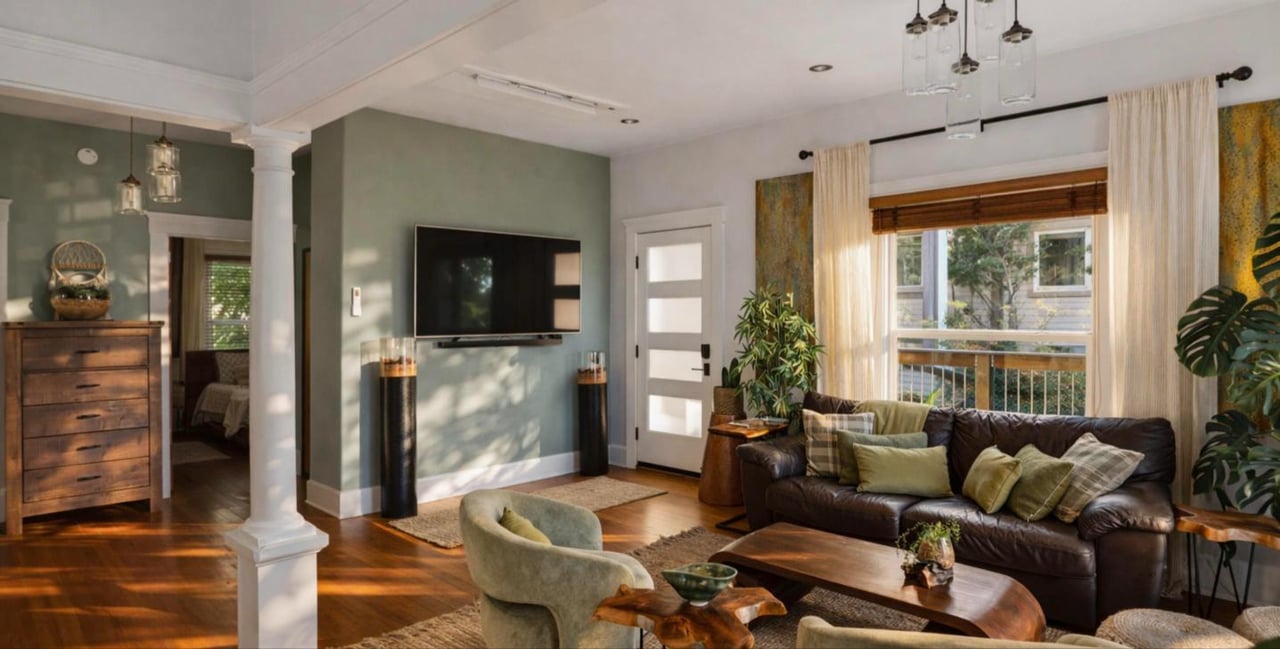
How to spot one: Low-pitched roofs, deep overhanging eaves with exposed rafter tails, a front porch with tapered or square columns, built-ins, lots of wood inside
This is the house most people picture when they think of old San Diego. Craftsman homes still dominate older neighborhoods like Mission Hills, University Heights, Bankers Hill and Hillcrest. You'll also find them all over North Park, South Park, Normal Heights and Kensington.
Mission Hills also has a lot of Prairie School homes, which are related to the Craftsman: wide, horizontal and with strong lines. The Inspiration Heights historic district is mostly Prairie School and Craftsman along with Period Revival styles.
What I'd tell a buyer:
When: Roughly 1915 to 1940
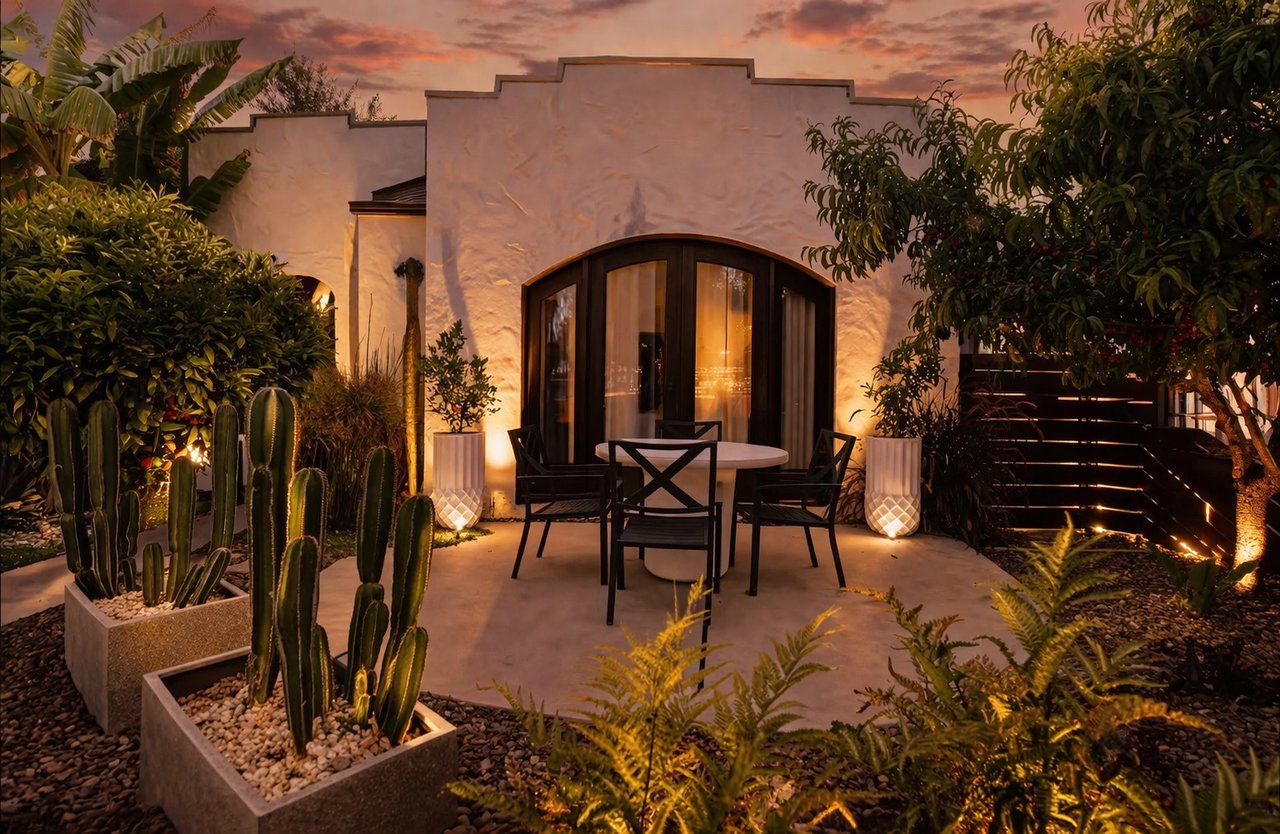
How to spot one: White or cream stucco, red clay tile roofs, arched windows and doorways, wrought iron, courtyards, and often a tower or decorative tile
The 1915 and 1916 Exposition made Spanish Colonial Revival the signature style of Southern California and influenced home design nationwide. San Diego took to it hard.
Where to find them: Kensington is full of them. You'll also find strong examples in Mission Hills, Point Loma (especially Loma Portal), North Park, Talmadge and parts of Bankers Hill.
What I'd tell a buyer:
Before the Exposition, architect Irving Gill was designing simple, unornamented concrete and stucco buildings. San Diego's Modernist heritage arguably began with his arrival in 1893. His work bridges the early styles and mid-century modern, and anything attributed to Gill is significant. If you ever see one for sale, call me.
When: Roughly the late 1940s to the 1970s
How to spot one: Flat or low-sloped roofs, walls of glass, post-and-beam construction, open floor plans, clerestory windows, a strong indoor-outdoor connection
I wrote a whole post on mid-century homes, so here's the short version. San Diego developed a modernism of its own, led by architects like Lloyd Ruocco, Homer Delawie, Sim Bruce Richards and Cliff May.
Where to find them: Point Loma, La Jolla, Clairemont, Allied Gardens, Del Cerro and the College Area, and some excellent canyon homes in Mission Hills. Many people are surprised by this one, but according to SOHO, Mission Hills has one of the largest enclaves of Mid-Century Modern architecture in San Diego.
What I'd tell a buyer:
The California ranch overlaps with mid-century: single-story, long and low, with an attached garage and a backyard focus. It's the most common postwar style in neighborhoods like Bay Park, Clairemont, San Carlos and much of the inland suburbs.
Most ranch homes aren't historic in the designation sense, but there are exceptions. Cliff May ranch homes are the big one.
This is where style stops being trivia and becomes money.
In San Diego, a historically designated home can qualify for a Mills Act contract, which can significantly reduce property taxes. Designation depends partly on integrity, meaning how much of the original design survives. A Craftsman with original windows, siding and porch has a much better chance than one that was stuccoed over in the 1970s.
If you're buying an older home with the Mills Act in mind:
My Mills Act guide walks through the full process.
Here's my honest take:
Neighborhood often matters more than style. A Spanish Revival in Kensington and one in North Park are different lifestyles at different prices.
What is the most common historic home style in San Diego?
Craftsman and Spanish Revival are the most common in older central neighborhoods. In the postwar suburbs, ranch and mid-century homes dominate.
Where can I find historic homes in San Diego?
Start with Mission Hills, South Park, North Park, University Heights, Kensington, Golden Hill, Sherman Heights, Bankers Hill and Point Loma.
Are historic homes in San Diego more expensive?
Often, especially well-preserved homes in established neighborhoods. A Mills Act contract can offset part of the cost through property tax savings.
Can you remodel a historic home in San Diego?
Usually, but designated homes and homes in historic districts face review for exterior changes. Check before you plan any work.
Old houses are my favorite part of this job. If you're touring Craftsmans in South Park, comparing Spanish Revivals in Kensington or wondering whether a home could qualify for the Mills Act, I'm happy to help you figure out what you're looking at before you make an offer.
Stay up to date on the latest trends in real estate.
November 22, 2026
How to spot each style, where to find it, and what to check before you buy

November 22, 2026
How to get insured early in escrow, what the FAIR Plan covers, and how to keep premiums down
November 20, 2026
What to check on licenses, neighbors, head count and fire insurance before you buy a destination home.
November 20, 2026
Our four short-term rentals, their 2026 numbers, and what they've taught us about buying one in San Diego.

November 16, 2026
Real monthly numbers at today's rates, plus what San Diego appreciation means over 10 years

November 16, 2026
Income and cash to close at today's rates, from a $650K condo to a $1.25M house
November 3, 2026
How The Carmine Collection manages a few select San Diego homes, what it costs, and the STRO rules every owner should know

November 3, 2026
How living upstairs and renting the lock-off downstairs under a home sharing license covered my mortgage

November 3, 2026
The research report, the criteria, the hearing, and what changes after.
Get assistance in determining current property value, crafting a competitive offer, writing and negotiating a contract, and much more. Contact Josh today.